Staying Healthy in a 15-Hour Workday: Life, Fitness, and Film Set Reality
I just wrapped a 10-hour shoot in Santa Monica, over on the west side of LA. Sounds reasonable enough on paper.
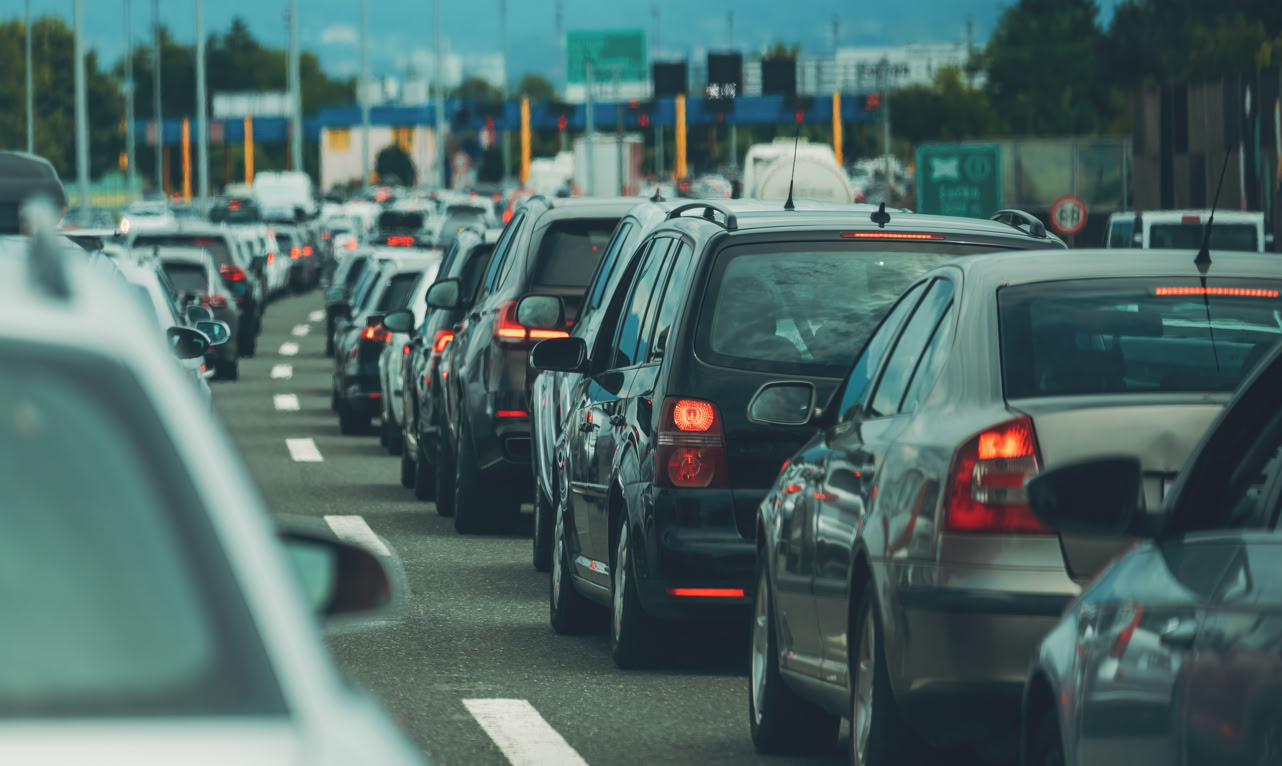
Then comes the drive home.
Twenty-two miles… and nearly two hours later, I finally get back to the east side. Only in Los Angeles can a 30-minute drive turn into a feature-length experience. That’s just a normal day working in film in a city like Los Angeles. Unless you’re lucky enough to work close to home, a “10-hour day” very quickly becomes 14 or 15 hours once you factor in the commute both ways.
And at that point, the question becomes:
How do you actually take care of yourself in this business?
Because let’s be honest—the last thing most of us want to do after a day like that is go to the gym. And cooking a healthy meal late at night? That’s a tough sell when you’ve just driven past three In-N-Outs that could have fed you in ten minutes.
This is the first of a two-part post. In this one, I’ll talk about how I try to maintain my overall health working in this environment. In the next, I’ll dive into how I manage to keep up my running and train for races—even marathons—while working in the chaos of film production.
The Reality of “On-Set Fitness”
Film work, in many ways, is not particularly kind to your body.
On run-and-gun days, I’m moving constantly—often carrying a heavy ENG sound bag and navigating all kinds of unpredictable environments.
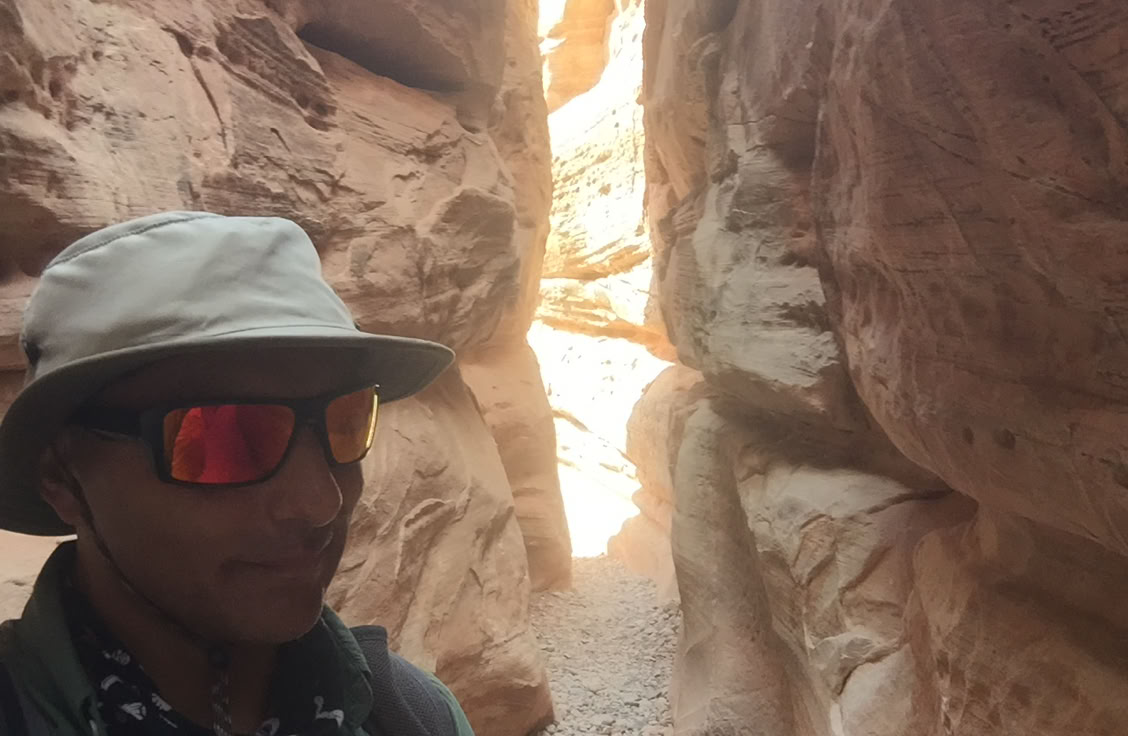
I remember one shoot in Utah where we were filming a documentary about ancient rock art. The crew, along with a couple of archaeologists, had to hike about three miles into a canyon just to reach the location and we had to haul all of our gear because there was no road.
Once we got there, we ended up filming inside a small cave with petroglyphs. Space was tight—very tight—and I found myself wedged into an oddly shaped corner, twisted at an angle that I’m pretty sure no fitness program would ever recommend, trying to boom the shot without dipping into frame.
At the time, I was just focused on getting the job done. But back at the hotel I had aches and pains in places that I didn’t even know that I had places!
And the thing is—that kind of situation isn’t unusual
It might look active from the outside, but it’s not exactly a balanced way to move your body. It’s more of a “use the same muscles in slightly questionable ways that break your body down for extended periods of time” kind of activity.
On narrative shoots, it swings the other way completely. I’m at the sound cart for hours at a time, barely moving at all.
So either I’m overworking specific parts of my body… or not moving enough altogether.
Neither is ideal.
The Craft Services Trap
Then there’s food.
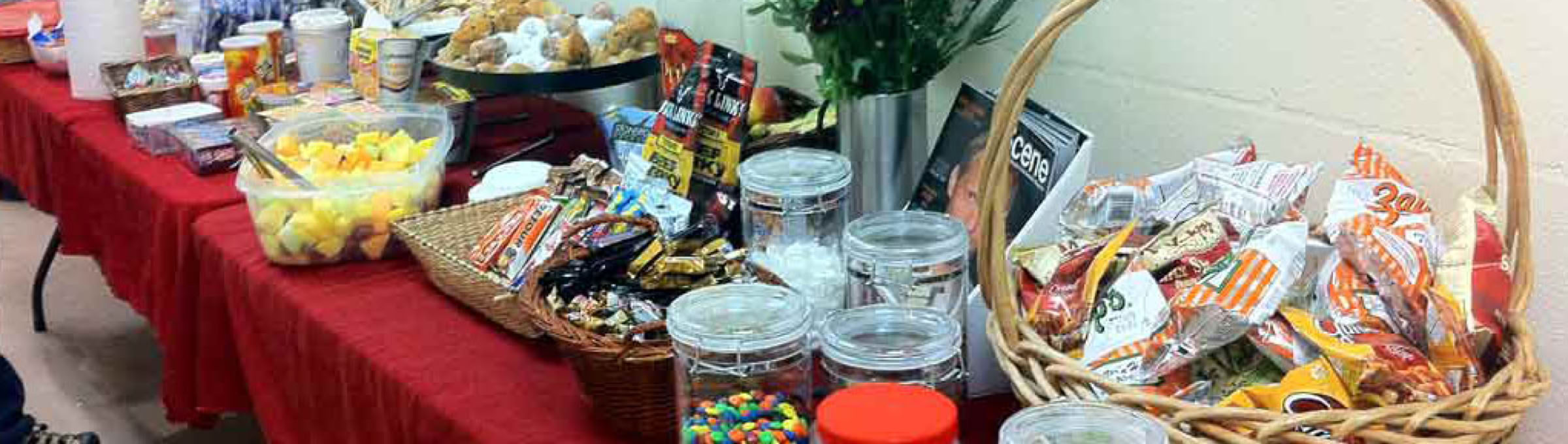
On larger productions, craft services is… impressive. Endless snacks—chips, candy, chocolate, sodas. There are healthy options too, of course—fruit, veggie trays—but let’s be honest, the temptation is always there.
And as a sound mixer, there’s often downtime. Lighting setups. Rehearsals. Camera tweaks.
Which means there’s plenty of time to wander over to the snack table “just for something small”… several times a day.
Lunch doesn’t exactly help either.
Catering is usually a full-on meal—protein, sides, salads, dessert. Way more food than I’d normally eat at lunch.
And then if we go into overtime and hit second meal? It’s almost always pizza, because it’s fast, easy, and keeps the day moving.
On smaller documentary shoots, it’s a bit different—less snacking, more meals from local restaurants—but portion sizes are still big, and meals are often rushed.
Either way, it’s very easy to overeat without really thinking about it.
Health Happens Outside of Work
What I’ve learned over time is that a lot of maintaining fitness in this industry comes down to what you do outside of work.
Days off are critical.
It’s very tempting to sleep in, catch up on shows, and do as little as possible—and sometimes that’s exactly what you need. Five or six long days in a row can take it out of you.
But I’ve found that even something simple—like a 30-minute run or bike ride at the start of the day—can completely change how I feel. It doesn’t have to be intense. It just has to be something.
Of course, rest matters too. If I’m exhausted, I’ll keep things light. But I try to avoid doing nothing at all.
And I’m definitely more mindful about what I eat on those days. After a week of craft service snacks, I don’t really need more of the same at home.
Small Changes on Set
Over time, I’ve also made a few small adjustments during the workday itself.
On narrative shoots, I set up my sound cart so I can stand rather than sit. I’ll still have a chair nearby, but standing naturally encourages more movement during downtime.
I try to get to set 30–40 minutes early when possible. That gives me time to stretch, walk around, and wake my body up before the day really starts.
At catering, I’m a bit more intentional. I’m not going to skip a good steak if it’s there—but I’ll be mindful of portion sizes and balance it out with healthier options.
And craft services? I try to limit the junk. Not eliminate it entirely—that’s not realistic—but be aware of it.
One thing I did cut out completely years ago was soda. These days it’s water, iced tea, or something non-sugary. I don’t ever touch diet sodas either. Some of those artificial sweeteners are worse than sugar. I really don’t want that in my body.
Making It Work (When You Can)
On that Santa Monica shoot, I knew I’d be sitting most of the day in a studio. I also knew the drive home would be long, slow, and late.
So I made a decision.
Instead of heading straight home after wrap, I brought my running shoes. The studio was about a mile from the beach, with bike paths and open space. So after we wrapped, I changed and went for a simple 5K run.
Nothing fancy. Just movement. I wasn’t about to break any world records or even post a PR.
But honestly—it made a huge difference. Mentally and physically. Plus, it was nice to actually see the ocean after being stuck inside a green screen studio all day.
I’ve started doing that more often—bringing my running gear to set. Sometimes it works out, sometimes it doesn’t, especially if we go into overtime.
But having the option makes it more likely to happen.
Finding Opportunities in the Chaos
On another shoot—multi-day, same location, about 12 miles from home—I was able to do something a bit different.
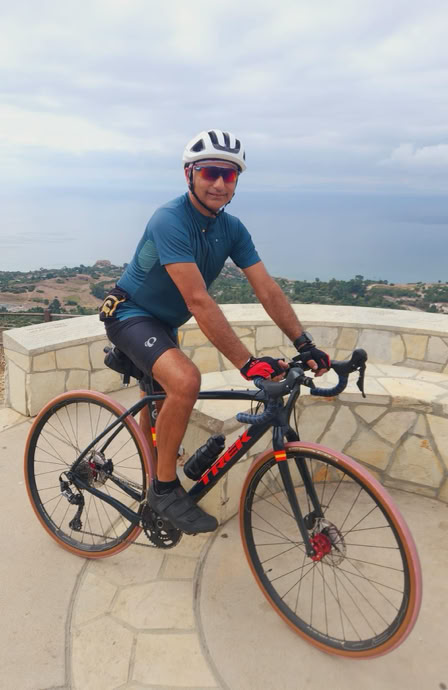
I drove in the first day with all my gear. Then for the rest of the shoot, I cycled to set.
In LA traffic, it didn’t really take any longer than driving.
But it added movement to my day. And it made indulging a little at craft services feel a bit more balanced.
Why It Matters
Maintaining health and fitness in this industry isn’t easy.
Long hours. Erratic schedules. Easy access to bad food. Not a great combination.
But even putting marathon training aside, I’ve realized how important it is just for doing the job well. When I’m taking care of myself, I’m more alert. More focused. Better able to adapt to whatever chaos the day throws at me.
I feel less fatigue on run-and-gun shoots. And even on long days at the cart, I handle it better.
It’s not about being perfect.
It’s about being intentional.
Because at the end of the day, this job demands a lot—from your time, your energy, and your body.
Taking care of that body isn’t optional.
It’s part of the job.
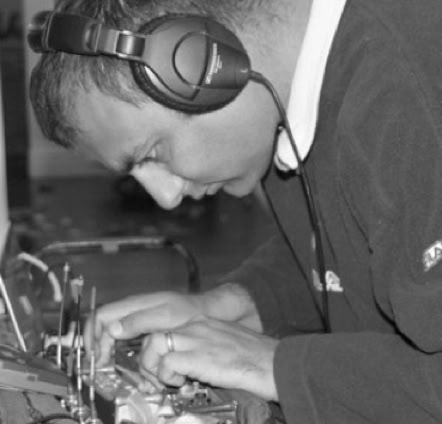
Martin Kittappa is an Emmy nominated production sound mixer and certified drone pilot with 20+ years experience working on film and TV productions around the world. A self proclaimed tech nerd. Lover of heavy metal music an avid runner, cyclist and a moderately good skier You can also check out out his YouTube Channel ‘The Full Later life’
From Accidental Start
To a career
26.2 Miles between
Takes
© Martin Kittappa Production Sound 2026